
AI Newsroom: The Future of Editorial Workflows Is Human-Led
The useful future of the ai newsroom is not autonomous publishing. It is a more structured editorial workflow: monitored sources, source-grounded drafts, visible provenance, and editors who stay responsible for the final call.
Questo articolo non è ancora tradotto, quindi è mostrato in inglese.
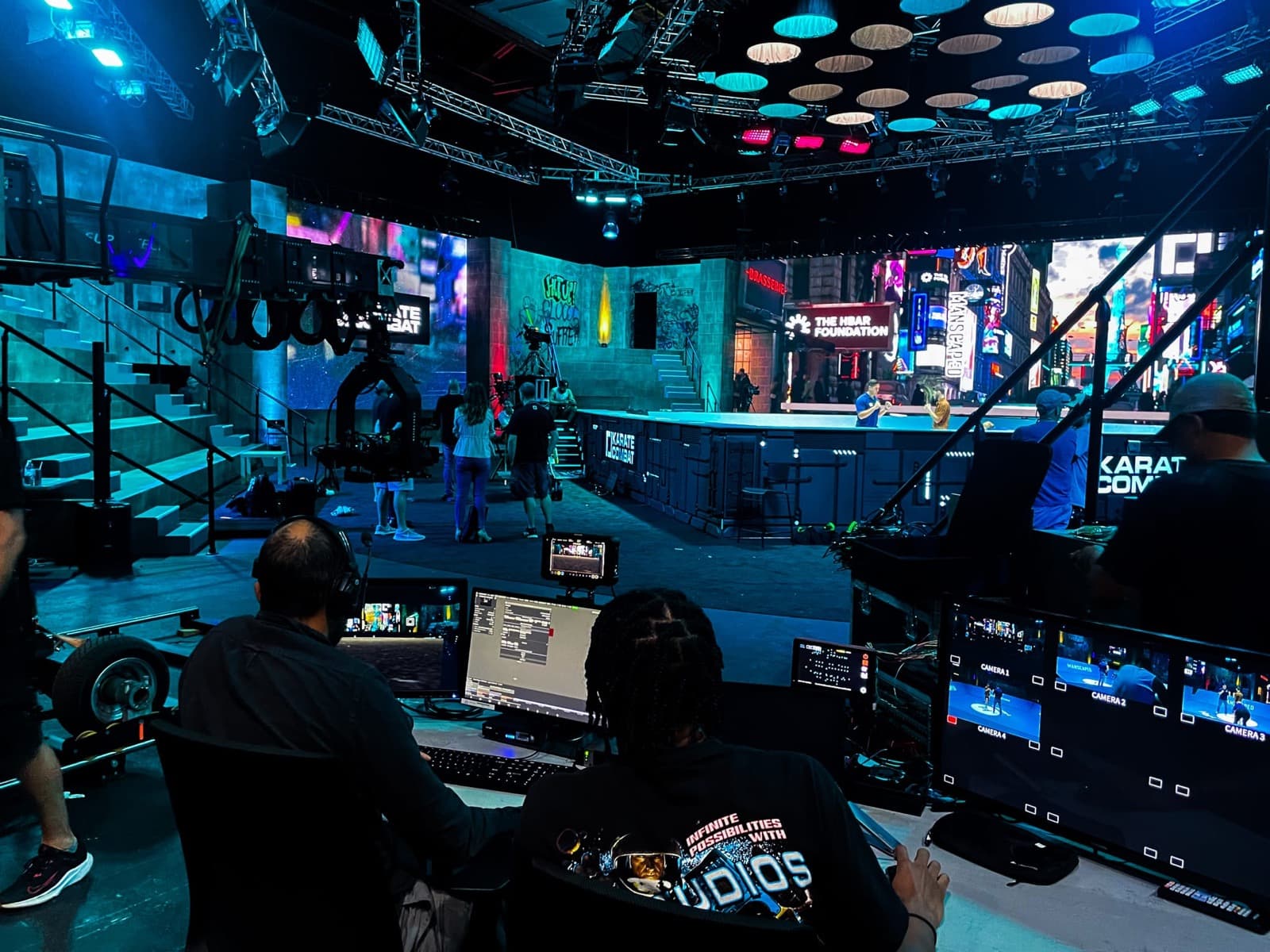
The phrase ai newsroom can sound like shorthand for replacing journalists with software. That is the wrong frame. A useful ai newsroom is not a robot editor, an autopublisher, or a generic chatbot sitting beside a CMS. It is a workflow layer that helps an editorial team see more source material, compare it faster, draft with clearer evidence, and keep human judgment in charge.
That distinction matters. Newsrooms do not only need more text. They need better intake, cleaner triage, stronger attribution, safer review paths, and a practical way to handle multilingual coverage without turning every story into stiff translation. The future of the ai newsroom sits in that operational layer, not in a fantasy where software decides what the public should read.
What an AI newsroom actually changes
Most editorial teams already use software across the whole publishing chain. They use feeds, analytics, CMS tools, newsletters, alerts, search, social monitoring, image tools, and collaboration systems. AI does not arrive in a blank room. It arrives in a crowded one.
The useful question is not whether a newsroom should "use AI." Many already do, directly or indirectly. The useful question is where the AI belongs.
An ai newsroom is strongest when it handles repetitive, evidence-heavy work:
- monitoring trusted sources,
- grouping overlapping coverage of the same event,
- summarizing source positions without flattening disagreement,
- drafting an article from verified source material,
- exposing provenance and confidence signals,
- routing sensitive or low-confidence stories to review,
- adapting the final copy to a local audience and language.
This is different from asking a model to "write an article about what happened." The future ai newsroom has to be source-grounded by design. It needs to know what material it used, where claims came from, and which parts still require an editor's eye.
From search and translation to monitored coverage
For many smaller publishers, international coverage still depends on a manual loop: watch wires, scan major outlets, check social platforms, translate relevant pieces, rewrite the copy, and hope no important update was missed. Larger publishers may have more people and better systems, but the basic problem remains the same. The desk has more incoming information than it can process cleanly.
An ai newsroom changes the starting point. Instead of waiting for an editor to search, the system monitors defined sources continuously. Instead of treating each article as a separate item, it can group multiple reports about the same event. Instead of producing a loose summary, it can prepare a draft with source references attached.
That does not remove editorial work. It changes its shape. The editor moves from "find the material and start from a blank page" to "review the grouped material, inspect the evidence, correct the framing, and decide whether this should run."
The second workflow is more realistic for modern newsrooms because it respects the constraint most desks face: there is too much to read, but not enough verified material ready to publish.
The future is source-grounded, not prompt-driven
The weakest version of an ai newsroom is just a prompt box with newsroom branding. It can produce fluent copy, but fluency is not the same as editorial reliability. News copy needs sourcing, context, restraint, and a clear path for correction.
A more serious ai newsroom starts with source material. The model is not asked to invent the story. It is asked to work from monitored, known, inspectable inputs. The system should make it easy to answer basic questions:
- Which sources support this claim?
- Do the sources disagree?
- Is the story based on one report or several?
- Is the event still developing?
- Does the topic require a stronger review gate?
- Has the draft introduced language the sources do not support?
These questions are not cosmetic. They are the difference between AI as a writing shortcut and AI as an editorial tool.
Editors become system designers, not button pushers
The future ai newsroom does not make editors less important. It makes their operating rules more explicit.
Editors already carry rules in their heads: which sources are trusted, which topics need more caution, when a headline is too strong, when a single-source story is acceptable, when translation loses context, and when a reporter should take over. In an ai newsroom, more of those rules need to become configuration, policy, review gates, and source settings.
That shift is practical. A desk can define which sources it monitors, which categories matter, which languages it publishes in, which topics require review, and which output format fits its CMS. The AI handles volume inside those boundaries. Editors still decide what those boundaries are.
This is also where AI newsroom design should stay humble. No system can remove the need for editorial responsibility. It can surface more material, make conflicts easier to see, and reduce blank-page work. It cannot decide the public interest for a newsroom. It cannot grant content rights. It cannot guarantee that a sensitive story is safe to publish without human review.
Provenance becomes part of the story file
Traditional article drafts often separate the copy from the evidence used to write it. The reporter or editor may know the sourcing, but the draft itself may not carry structured provenance.
An ai newsroom should make provenance part of the story file. Source links, claim support, confidence signals, conflicts, revision history, and review state should travel with the draft. This matters for everyday editing, not only for audits.
When provenance is visible, an editor can work faster without working blind. A weak claim can be removed. A disputed detail can be softened. A missing attribution can be added. A story based on a single source can be held until more reporting appears.
This is one of the clearest areas where the ai newsroom can improve the actual workflow. The point is not to make AI sound more confident. The point is to make the draft easier to challenge.
Multilingual news becomes local writing, not recycled translation
Many publishers need international coverage in a local voice. Basic translation is not enough. A translated article can preserve words while losing context, tone, legal nuance, and reader relevance.
The better ai newsroom workflow treats multilingual output as editorial synthesis, not sentence-by-sentence translation. The system reads source material, identifies the story, keeps attribution visible, and drafts for the target audience in the target language.
That difference matters for local publishers. Readers usually do not want a visible translation of a foreign article. They want a clear local story that explains what happened, why it matters, and where the information came from.
The constraint remains the same: multilingual AI output still needs review. Names, institutions, legal terms, political labels, and culturally specific references can be mishandled. The future ai newsroom should make those risks easier to inspect, not pretend they disappear.
Review gates matter more, not less
The more capable AI systems become, the more important review design becomes. A newsroom that uses AI for recipes, sports summaries, or market briefs faces different risks from one covering courts, elections, public health, violent conflict, or deaths.
A practical ai newsroom should separate routine editorial assistance from sensitive coverage. It should hold stories for review when the topic, confidence level, source count, or claim type demands it. It should also make clear when a human changed the draft, approved it, rejected it, or sent it back for more work.
This is not bureaucracy for its own sake. It is how an AI-assisted newsroom keeps responsibility attached to people and roles. The final publishing decision should remain visible and accountable.
What an AI newsroom should not do
The future of the ai newsroom is easier to understand if the limits are clear.
An ai newsroom should not be treated as a legal rights engine. If a publisher does not have the right to use or redistribute certain material, AI does not solve that.
It should not be treated as a substitute for original reporting. It can help process known source material, but it cannot interview a witness, attend a council meeting, build trust with a source, or make a public-interest judgment.
It should not hide uncertainty. If source coverage conflicts, the draft should show that conflict. If the story is thin, the system should say so.
It should not publish sensitive stories without review just because the text looks polished.
These limits are not a weakness. They are the basic shape of a responsible ai newsroom.
A small product note
ErmisAI sits in this workflow category: monitored sources, same-event grouping, localized story synthesis, editorial review, and delivery into existing publishing systems. It is not a replacement for the newsroom's CMS, and it should not be described as autonomous journalism.
That is the right kind of modesty for this market. The durable value of an ai newsroom is not that it removes editors. It is that it gives editors a more usable operating surface for high-volume coverage.
The practical future of the AI newsroom
The practical future of the ai newsroom is less dramatic than the common pitch and more useful than the common fear.
It is a newsroom where incoming coverage is organized before an editor opens a blank document. It is a draft that carries its sources with it. It is multilingual copy that starts from verified material instead of raw translation. It is review gates for sensitive topics. It is a clearer split between what software can prepare and what editors must decide.
A newsroom that uses AI well is not defined by how much machine-written text it publishes. It is defined by the editorial controls it keeps around AI-assisted work.
That is where the ai newsroom becomes a real category: not a replacement for journalism, but a stricter, more transparent, more source-aware way to run the parts of journalism that software can actually support.